What Waterfall Delivery Taught Me About Planning Photography For A Wedding!
- Phil Hargreaves
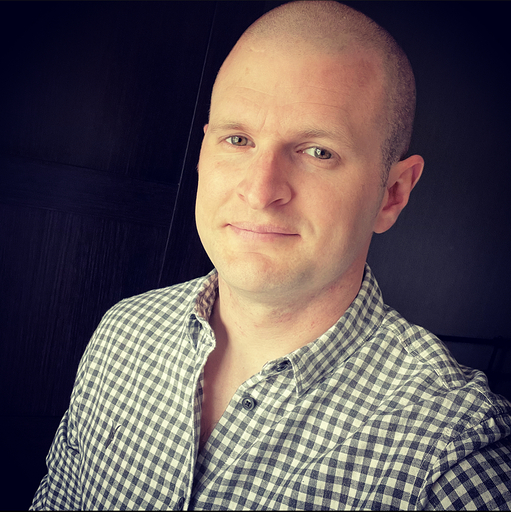
- Aug 17
- 7 min read

I recently met up with some friends to talk about their upcoming wedding and, more specifically, the photographs they want captured on the day. They trusted me with the job, which is both a privilege and a responsibility. We talked about the people who matter to them, the moments they want to remember, the photographs they definitely want, and perhaps just as importantly, the things they don’t want.
You could call it an initial consultation. For me, it was just catching up with friends, but it’s really about understanding the requirements.
While we were talking through how their day might unfold, I found myself drawing a rather unexpected parallel to my day job as a Software Delivery Leader.
Weddings are remarkably similar to waterfall delivery.
That might sound like a strange comparison, especially when so much modern software delivery is built around being agile, iterative, and responsive to change. But the more I thought about it, the more the comparison made sense.
A wedding has a beginning, a sequence of clearly defined stages, dependencies, milestones and, ultimately, a very clear outcome.
And unlike some software projects, everyone generally knows exactly what the end state is.
Two people get married.
Understanding the requirements
Before any delivery begins, you need to understand what you're actually trying to achieve.
That's true in software, and it's equally true with wedding photography.
Every couple is different. Some want lots of formal photographs with family and friends. Others would rather spend as little time as possible posing for the camera. Some have particular traditions they want captured, while others are much more interested in the little moments that happen around the edges of the day.
So that initial conversation matters.
I want to understand what is important to them. Who are the people they absolutely want photographs of? Are there family members travelling from far away? Are there relationships or moments that have particular significance? Are there photographs they've seen elsewhere that they love? And, importantly, what would make them look back at their wedding photographs in ten, twenty or thirty years and think, yes, that's exactly how I remember it?
It’s really no different from understanding a customer’s needs before starting a software delivery.
The better you understand the outcome at the beginning, the more confident you can be about everything that follows.
The plan gives you confidence
One of the things I love about weddings is that, for all the emotion and unpredictability, the day usually follows a fairly consistent flow.
People arrive. The ceremony happens. The couple gets married. There are drinks, photographs, food, speeches, dancing and eventually the party winds down.
There is a sequence to it, and that sequence gives me context.
I know where we are in the day. I have a pretty good idea of what is coming next. I know which moments are likely to happen and, more importantly, I know which ones I can't afford to miss.
That doesn't mean I'm standing there with a clipboard and a stopwatch.
Quite the opposite.
My approach to photography is deliberately relaxed. I want to capture memories as they happen rather than constantly directing people into position. The natural smile, the unexpected laugh, the look between two people, someone getting emotional during a speech, friends who haven't seen each other for years catching up.
Those moments tell the story of the day.
Natural, candid photography captures raw emotion in a way that posed photography simply can't. There is something about looking at a photograph and remembering not only what happened, but exactly how it felt.
But here's the thing: being spontaneous doesn't mean being unprepared.
The best candid photographs aren't accidental
Someone might look at a wedding photographer working in this way and think they're simply wandering around with a camera waiting for something interesting to happen.
A lot of planning goes into making it look that effortless.
I need to understand the timings. I need to know where I'm likely to be. I need to understand the important people and the important moments. I need to anticipate what is coming next so that I'm in the right place when it happens.
It's much like software delivery.
A good delivery team doesn't just react to whatever happens next. They understand the roadmap, the dependencies, the risks and the outcomes they're trying to achieve. They prepare for what they can predict while staying flexible enough to handle what they can't.
That is exactly how I approach a wedding. I have a plan, but I'm not a slave to it.
Because things never quite go to plan
Of course, weddings are not software projects. Thankfully, no Jira board follows the bride down the aisle.
Things happen.
The bride might be running late. The speeches might take longer than expected. Someone might disappear just when you need them for a family photograph. The weather might suddenly change. The confetti might go absolutely everywhere except where you expected it to.
And that's fine. The plan is there to give you confidence, not to dictate every second.
I've learned this repeatedly through software delivery. A plan is useful, but blindly following a plan when circumstances have changed isn't good delivery leadership.
You need to understand what matters, what can move, and what absolutely cannot be missed.
The same is true at a wedding.
If we're running fifteen minutes behind, that doesn't mean the day has failed. It means I need to adapt. Perhaps we shorten something, move something else or take advantage of a moment that has presented itself naturally.
The outcome hasn't changed.
We're still getting married.
I'm still capturing the story.
We just might take a slightly different route to get there.
Taking away the worry
One thing I think couples worry about with a more natural, candid approach is whether they might miss something important.
And I completely understand that.
Some photographs simply cannot be recreated.
The confetti shot. The first kiss. A particular family photograph. The reaction of a parent watching their child get married. Those spontaneous smiles around the room. The little moments that happen once and are gone forever.
Of course, some moments will pass us by. That's inevitable. Nobody can photograph every second of a wedding.
But that's also why you're hiring a photographer.
My job isn't just to take photographs. It's to take away some of that worry.
I want the couple and their guests to enjoy the day, not constantly wonder whether they're supposed to be doing something for the camera.
I'll step in when I need to. I'll organise the group photographs. I'll make sure we get the important shots. I'll make sure I'm in the right place for those moments that matter.
And then I'll get out of the way again.
Because I don't want the photography to become the event. I want it to become part of the event.
Waterfall doesn't have to mean rigid
Perhaps this is where my two worlds really come together.
Waterfall delivery sometimes gets a bad reputation. It's often portrayed as a rigid process where everything is decided upfront and absolutely nothing can change.
But that's not how I see it. Especially when I'm drawing learnings from it and applying it to something else: photography.
Good planning doesn't eliminate change. It gives you a foundation from which to respond to it.
The same applies to a wedding.
The couple has spent months planning the day. There is a schedule, suppliers, venues, timings, meals, speeches and all the other things that need to come together.
But when the day arrives, the plan becomes a framework.
The real skill is understanding the intent behind the plan.
In software delivery, we talk about outcomes rather than simply outputs. Delivering every item exactly as originally planned isn't necessarily success if the outcome is wrong.
Wedding photography is much the same.
I could deliver hundreds of technically perfect photographs and still fail if I haven't captured what mattered to the couple.
The real measure of success isn't how many photographs I take. It's whether those photographs tell their story.
The retrospective
Eventually, the wedding ends.
The guests go home. The music stops. The suits come off, the dress gets put away, and everyone starts recovering from what was hopefully an incredible day.
For me, though, the delivery isn't quite finished.
I will go home with hundreds, maybe thousands, of photographs. I then review them, select the moments that matter, edit them, and bring everything together into a collection that tells the story of the day.
It's the retrospective, in a way.
Looking back at what happened, identifying the moments that mattered and turning everything into the final product.
And that's where I think photography has one of the best acceptance criteria of all.
It's not a checkbox.
It's not a status turning green.
It's not a report saying delivered successfully.
It's the reaction when someone looks through their photographs and suddenly remembers exactly what was happening at that moment.
I remember this.
I remember how nervous I was.
I remember Dad laughing.
I remember seeing her walk down the aisle.
I remember everyone being together.
That's the real outcome.
Good delivery should feel effortless
Perhaps that's the biggest lesson I've taken from moving between these two worlds.
Whether you're delivering software or photographing a wedding, a lot of the work happens behind the scenes.
The planning. The preparation. Understanding the requirements. Thinking about dependencies. Anticipating risks. Adapting when things change. Knowing when to step in and, perhaps just as importantly, knowing when to get out of the way.
The customer doesn't necessarily need to see all of that.
They should experience the outcome.
That's exactly how I want to approach wedding photography.
I don't want the couple worrying about whether I've captured everything. I don't want their guests feeling like they're constantly being directed around by a photographer. And I don't want the day to feel regimented just because a camera is in the room.
I want people to relax.
I want them to forget I'm there.
I want them to laugh, cry, celebrate, catch up, dance badly and enjoy every minute of the day.
And I'll be there quietly capturing it.
Because perhaps the best delivery, whether it's software or photography, is the one where all the planning, preparation, and hard work behind the scenes simply lets people enjoy the end result.
Plan carefully. Understand what matters. Expect change. Adapt when you need to. And never lose sight of the outcome.
I'm sure Shelly and Ryan will have a super day in 2027. I'm already looking forward to joining them on a venue visit in a few months and hoping we can organise a pre-wedding shoot too!


Comments